Eden Prairie's resale market gives sellers real leverage right now. Homes moved at 98.7% of asking price in January 2026 on roughly three months of supply, and the median sale sat at $453,990. That leverage evaporates in a specific place: the inspection response period. Three line items, more than anything a buyer negotiates on price, decide whether an Eden Prairie deal closes on the original terms.
They are stucco moisture testing, the state's radon disclosure obligation, and a sewer scope. Each one hits a specific piece of the local housing stock, each runs on a clock that doesn't match a standard 30-to-45-day close, and each one is easier to plan for before the listing goes live than to react to after an offer is accepted.
The stucco clock starts before you list
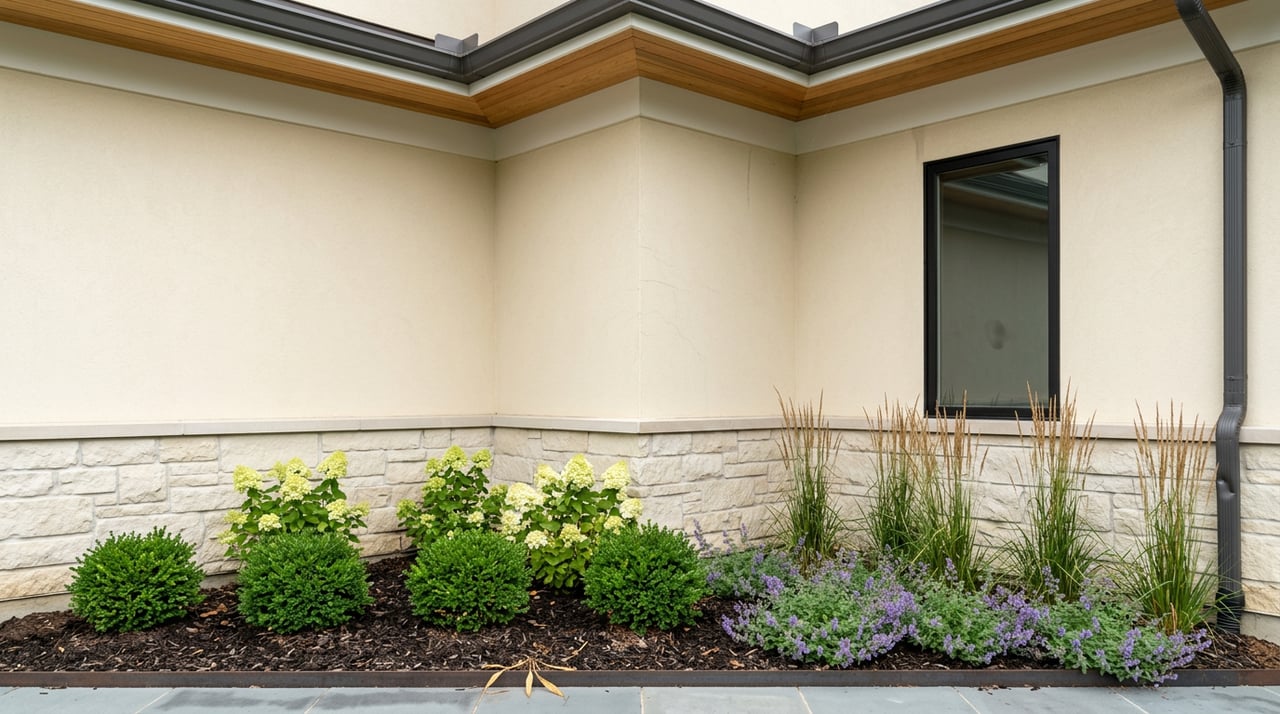
Eden Prairie built a large share of its move-up housing in the 1990s and early 2000s, and stucco and stucco-type exterior finishes are common on those homes. Inspecta-Homes puts the concern plainly: stucco or stucco type exterior finishes can hide moisture issues, and a home inspector may find things that indicate potential issues with drainage off the roof or missing components that help keep the walls dry. A visual inspection flags the risk. It does not answer it.
The answer comes from an intrusive moisture inspection, and here is where the calendar matters. Minnesota Home Inspectors' protocol states it plainly: this is an intrusive inspection and requires preapproval by the property owner, and intrusive moisture inspections can only be scheduled in conjunction with a full home inspection and require a 7 to 14 day lead time. The process itself is invasive: the intrusive portion involves drilling 3/16" holes in the siding and inserting a pin-probe moisture meter to take moisture readings of the substrate.
Read the sequence carefully. A buyer with a stucco home under contract needs seller permission to drill into the exterior, has to bundle the test with the general inspection, and has to schedule it a week or two ahead. In a market where offers are being accepted quickly and inspection windows are typically five to ten days, that lead time collides with the contingency clock. The seller who was not expecting the request loses time deciding. The buyer who did not plan for it loses the inspection window.
Sellers of any Eden Prairie stucco home built roughly between 1990 and 2005 can take the friction off the table by testing before listing. If the walls are dry, the report becomes marketing. If they aren't, the negotiation moves to a contractor bid instead of a buyer's worst-case imagination. Local firms that specifically list stucco moisture inspections as a service include Accurate Home Inspections on Boyd Avenue in Eden Prairie, Branch Property Investigations, and MSP Inspections.
Radon is a disclosure problem before it is an air-quality problem
Radon gets treated as a mitigation question. In Minnesota, it starts as a paperwork question, and the paperwork has teeth.
The Minnesota Radon Awareness Act, codified at Minnesota Statute 144.496, requires that before signing an agreement to sell or transfer residential real property, the seller shall disclose in writing to the buyer any knowledge the seller has of radon concentrations in the dwelling. The disclosure has to be delivered before the purchase agreement is signed, not at closing.
What has to be on that disclosure is specific. The statute requires whether a radon test or tests have occurred, the most current records and reports, a description of any radon concentrations, mitigation, or remediation, information regarding any radon mitigation system installed, and a radon warning statement. The seller also has to hand over a copy of the Minnesota Department of Health publication Radon in Real Estate Transactions.
Liability follows the disclosure. A seller who fails to make a radon disclosure and is aware of material facts pertaining to radon concentrations is liable to the buyer, who may bring a civil action for damages within two years after closing. That two-year window is worth reading twice. It survives closing.
Two nuances matter for Eden Prairie sellers specifically:
- Testing is not required. Disclosure is. If you have never tested, that is what the form says. If you tested five years ago and lost the report, the statute still asks you to describe what you knew.
- New construction has its own line item. Minnesota's building code, effective 2009, requires a basic radon-control layout under the slab, and that layout is the radon-resistant construction the seller discloses; a separate test result is its own line on the form. Owners of newer Eden Prairie homes sometimes assume the code layout counts as mitigation. It doesn't. It's a passive control, not a tested outcome.
The Minnesota Department of Health puts a floor under the recommendation: MDH strongly recommends that all home buyers have an indoor radon test performed prior to purchase or taking occupancy, and recommends having the radon levels mitigated if elevated radon concentrations are found. In practice, most Eden Prairie buyers add a radon contingency at offer. A short-term test runs two to seven days, which fits the inspection window if it is ordered early. If the result comes back at or above the EPA's 4 pCi/L action level, the buyer can ask the seller to mitigate, ask for a credit, or walk. None of that is set by statute. It is a negotiation inside the contingency, and it moves faster when the seller has already priced a mitigation system and is ready to counter with a specific number.
The sewer scope nobody schedules until it is too late
Eden Prairie's older neighborhoods still carry original or partially replaced sewer service lines, and roots, clay joints, and settled sections don't announce themselves in a standard general inspection. A sewer camera scope, run through the cleanout, checks for root intrusion, cracks, and obstructions.
The scope costs a few hundred dollars. A collapsed lateral or an excavation to the city main can cost five figures. That gap is exactly why the sewer scope is the inspection item most likely to reopen a deal that a seller thought was closed. It is worth commissioning before the listing goes live on any home more than roughly thirty years old, and worth documenting even for newer homes with mature trees on the service line side of the property.
How the three items fit inside a 30-to-45-day close
The reason these items rewrite deals is not that they are complicated. It is that they collide with a compressed timeline.
| Item | Typical lead time | Where it lands in the deal |
|---|---|---|
| General home inspection | 1 to 3 days from acceptance | Days 1 to 7 of inspection window |
| Intrusive stucco moisture test | 7 to 14 days, requires seller written consent | Often falls outside a 10-day inspection window unless scheduled at offer |
| Radon disclosure | Before purchase agreement is signed | At offer, not during inspection |
| Short-term radon test | 2 to 7 days under closed-house conditions | Inside inspection window if ordered early |
| Sewer scope | 1 to 5 days | Inside inspection window |
| Mitigation bid or moisture repair estimate | 3 to 10 days depending on contractor backlog | Often the reason inspection responses run long |
The seller who reads that table and shrugs is the seller whose next deal will slip a week. The seller who pre-orders the tests they can pre-order, and pre-negotiates the disclosures they must pre-negotiate, keeps the leverage the January 2026 market gave them.
A few questions that come up in listing consults
Do I have to test for radon before I list? No. Minnesota's statute requires disclosure of what you know, not the generation of new information. A pre-listing test is a strategic choice, not a legal one. If you have reason to believe levels are elevated, testing and mitigating before the buyer's contingency turns a hard negotiation into a documented fix.
My home has stucco but the inspector didn't flag anything visible. Do I still need the intrusive test? The buyer, not the seller, orders the intrusive test, and the buyer's inspector will usually recommend one on any stucco-clad home from the 1990s or early 2000s regardless of what the walls look like from ten feet away. The right question for a seller is whether to run the test yourself before listing so the report is already in the disclosure packet.
How long does a radon mitigation system take to install, and does it hold up a close? Most residential systems install in a day. Scheduling with a licensed mitigator during peak spring inventory can add a week or two of lead time. If the buyer requests mitigation late in the inspection response, that lead time is what pushes closings.
Are these three items the only ones that catch Eden Prairie deals? No, but they are the three that show up most consistently across the local inspection reports, they are all tied to the specific age and construction of Eden Prairie's housing stock, and they are the ones sellers can influence before the buyer's clock starts.
Where this leaves you
Eden Prairie in mid-2026 is still a market where a well-prepared seller has room to hold price. What sellers lose isn't usually the sale. It's the terms. Every one of the three items above is easier to price into the listing than to argue about in the inspection response, and every one is easier to plan for when you know it's coming.
If you're within a few months of listing an Eden Prairie home, or writing an offer on one, Angela Kokkos can walk you through which of the three apply to your specific address and how to sequence them so nothing lands outside the inspection window. Let's talk about it over coffee.